Tarot spreads
The one-card tarot spread
The one-card tarot spread is one question and one card. It is the quickest way to start reading tarot.
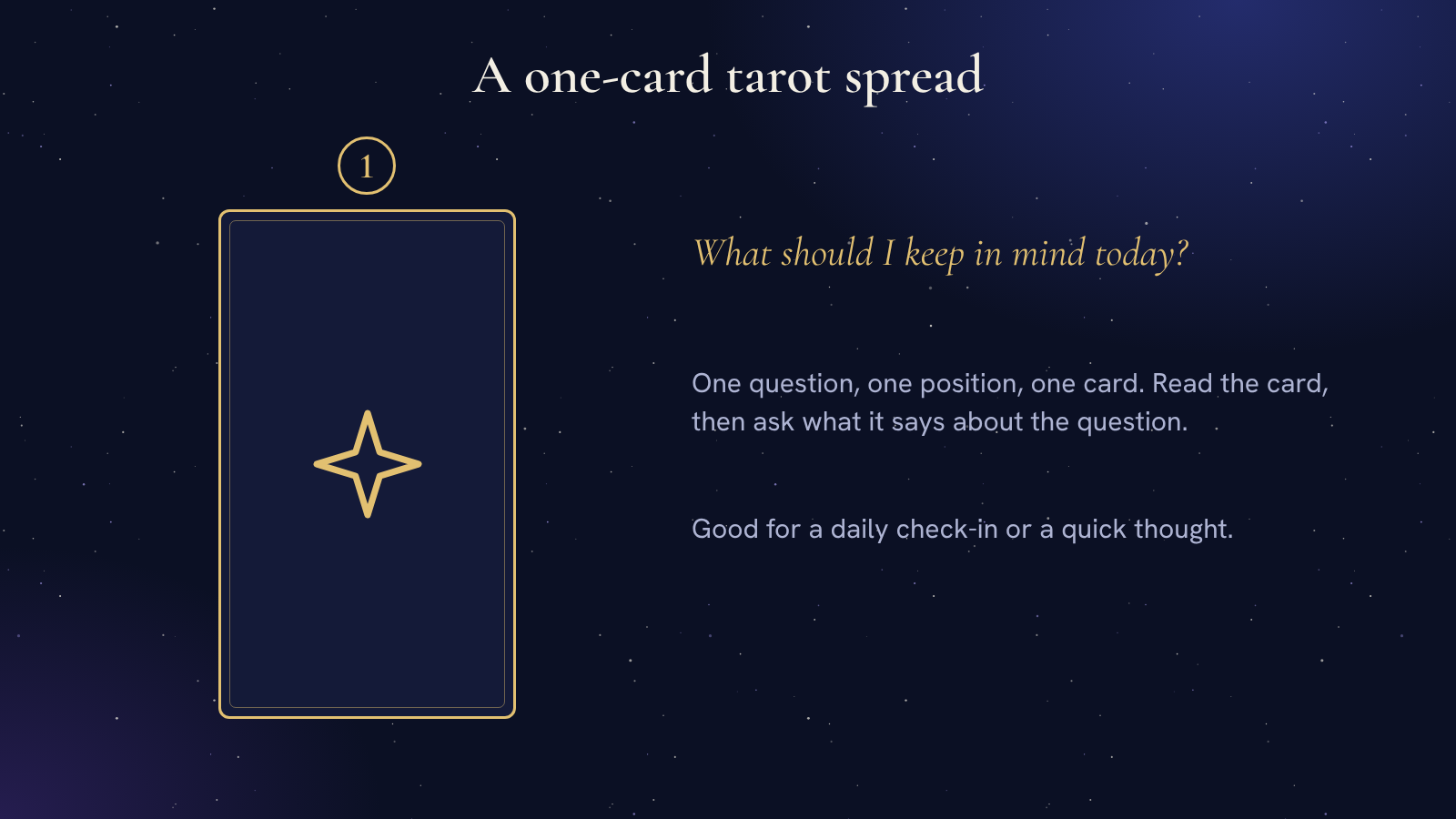
The one-card tarot spread is the simplest layout there is: one question, one position, one card. It takes under a minute, and it is a good first spread if you are new to tarot.
How the one-card spread works
You shuffle the deck while holding a question in mind, then turn over a single card. The card's position is the question itself, so there is nothing else to remember. Everything you need is in the card and what it brings to mind.
How to lay it out
- Choose a question. Keep it open. "What should I keep in mind today?" works better than a yes or no question.
- Shuffle. Mix the cards until it feels right. There is no set number of shuffles.
- Draw one card. Take it from the top of the deck and place it face up.
- Read it. Start with what you see, then ask what it says about your question.
Questions that suit one card
- What should I keep in mind today?
- What is the main theme of this week?
- What do I need to pay attention to in this situation?
- What is one thing I could do differently?
Short, open questions give the card room to prompt something useful. A card can't answer "Will I be happy?", but it can open up what happiness would involve for you.
A worked example
Suppose you ask, "What should I keep in mind today?" and draw the Four of Cups, a card showing a figure sitting under a tree, ignoring cups in front of them. You might notice the figure's attention is elsewhere. Reading it against your question, it could suggest taking a moment to notice what is already on offer before looking for more. Another reader might see something different, which is how it should be.
Strengths and limits
A single card is quick and low effort, which makes it good for a daily habit. It also helps you learn the deck, because you spend time with one card at a time. The limit is that one card gives one angle. If your question needs more than that, a spread with several positions gives you more to work with.
If the card seems unclear, you can pull one more card for clarification. Many readers consider that a second one-card spread rather than part of the first, so treat it as a fresh prompt.
Keeping a daily card journal
Many people draw one card each morning and write a line about it. Over a few weeks you learn the cards faster, and you can look back and see what themes you were drawn to. Writing the card down before the day starts means you are not tempted to match it to what happened afterwards.
Tarot has no demonstrated ability to predict events. Readings are for entertainment and reflection only, and they aren't medical, legal or financial advice.
Where to go next
When one card is not enough, the next step up is the three-card spread. For the method behind any layout, see how to read a tarot spread, step by step. If you have a spread laid out already, you can photograph it and have it read card by card.